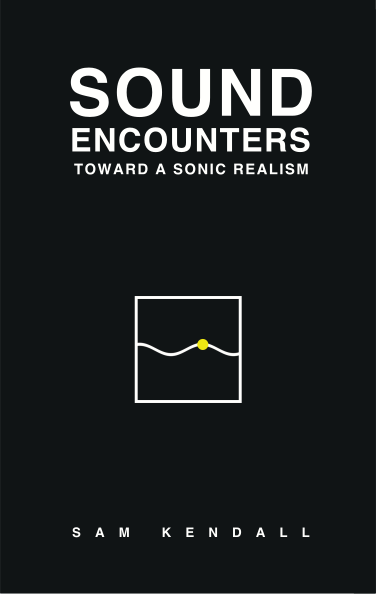
Sound Encounters: Toward a Sonic Realism
What is sound, really?
Bridging sound art, materialist philosophy, and object-oriented thinking, this is a manifesto for encountering sound as real, relational, and alive.
Available to buy in paperback only
Table of Contents
Sound Encounters: Prelude
This book began with a discomfort I couldn't quite name. It came as a low hum - a residue left behind by texts that spoke of sound...
Against manifestationism
If a tree falls in the forest and no one is around to hear it, does it make a sound?
Finitude and withdrawal
To say that sound is real is a challenge to more than physics or metaphor. It questions a metaphysical tradition that privileges...
Deleuze and the encounter
Sound is unstable. It moves too quickly to be seen, too forcefully to be ignored. It arrives as event. As force.
Interlude: Beyond human ears
If Deleuze helps us rethink sound as encounter, listening beyond the human expands that encounter past human thresholds.
From reduction to realism
The dominant traditions - scientific, philosophical, aesthetic - have each trimmed sound down to something manageable. Something...
Sonic object mapping
If sonic objects are real, if they emerge, act, and withdraw, then how do we listen to them as things - as forces - that shape the...
The politics of sound
If sound is real, it must be accounted for. And accounting cannot happen outside politics. A sonic realism worth defending must go...
Towards a sonic realism
No theory of sound should move forward without turning its head. This chapter stages that turn: a more critical listening to what has...
Practising realism
To theorise sonic realism is to affirm sound's capacity to exceed, withdraw, resonate. Theory alone does not suffice. Sonic realism is...
Coda: Encountering sound
There's a sound you remember, but you can't place. Not a melody. Not a word. More like a texture. A pressure in the air.
About the Book
If a tree falls in a forest and no one is around to hear it, does it make a sound?
This book says yes - and explains why that matters.
Sound Encounters is a manifesto for sonic realism: a philosophy of sound that rejects the dominant idea that sound only exists as sensation or signal. Against traditions that reduce sound to perception or vibration, this book argues that sound is real - a material, affective, and political force that acts whether or not it is heard.
Drawing from speculative realism, object-oriented ontology, intersectional critique, Deleuze, and sonic art, Sam Kendall invites readers to rethink sound as presence - not proxy. From the crack of a snare to the hum of an electromagnetic field, from protest chants to voice notes, sound is treated not as symbol, but as object: emergent, relational, and withdrawn.
For those working across philosophy, art, or sound theory, Sound Encounters offers a new way of listening - one that confronts the politics of perception and insists on the real weight of what is often dismissed as ephemeral.
This is not a book about what sound means.
It's about what sound does.
 Resonant Thoughts